A retail campaign might look perfectly straightforward on paper: one concept, one set of graphics, one launch date. Then you add 30, 50 or 100 stores to the mix, and suddenly there are a lot more moving parts to keep in check.
Different store layouts, quantities, delivery requirements and installation windows can all affect how a campaign comes together. And when every location needs to look the same on launch day, there’s little room for things to go off script.
A successful retail POS rollout goes beyond producing great graphics. It’s about getting every stage, from approved artwork and production to logistics and installation, working in sync. Getting the planning right means the rollout can run like clockwork.
A multi-store rollout can look simple from the shop floor, but there’s plenty to coordinate behind the scenes. A graphic that works perfectly in one location might need different dimensions, quantities or fixing methods in another. Add varying delivery windows, store access and trading hours, and the same campaign can quickly become a logistical juggling act.
That’s why a retail POS rollout shouldn’t be treated as a series of separate print jobs. It needs to be managed as one connected project, with store-specific requirements feeding into the wider production and installation plan.
Before anything goes into production, create a rollout specification covering what each store needs, where it goes and when it needs to be ready.
Record the key details, including:
This becomes the campaign’s single source of truth, giving production, logistics and on-site teams the information they need to deliver the right materials to the right store.
A great retail POS concept needs to work in the real world, not just on screen. For more complex displays, CAD and prototyping can help test dimensions, construction, assembly, and fit before committing to full production.
For the Hotpoint rollout, we engineered 32 cardboard POS displays for a nationwide launch. CAD was used to prototype how the components would lock together without adhesives, while the structures were designed to flat-pack for easier transportation. The displays were then installed across the country over a single week, ready for the same launch date.
This approach is particularly valuable for 3D bespoke POS, helping refine the design before materials are cut and reducing the risk of costly changes later.
Once the design is approved, consistency becomes a production challenge as much as a creative one. Colour, dimensions, materials, finishing and print quality all need to match across the rollout, while careful version control helps ensure every store receives the correct artwork.
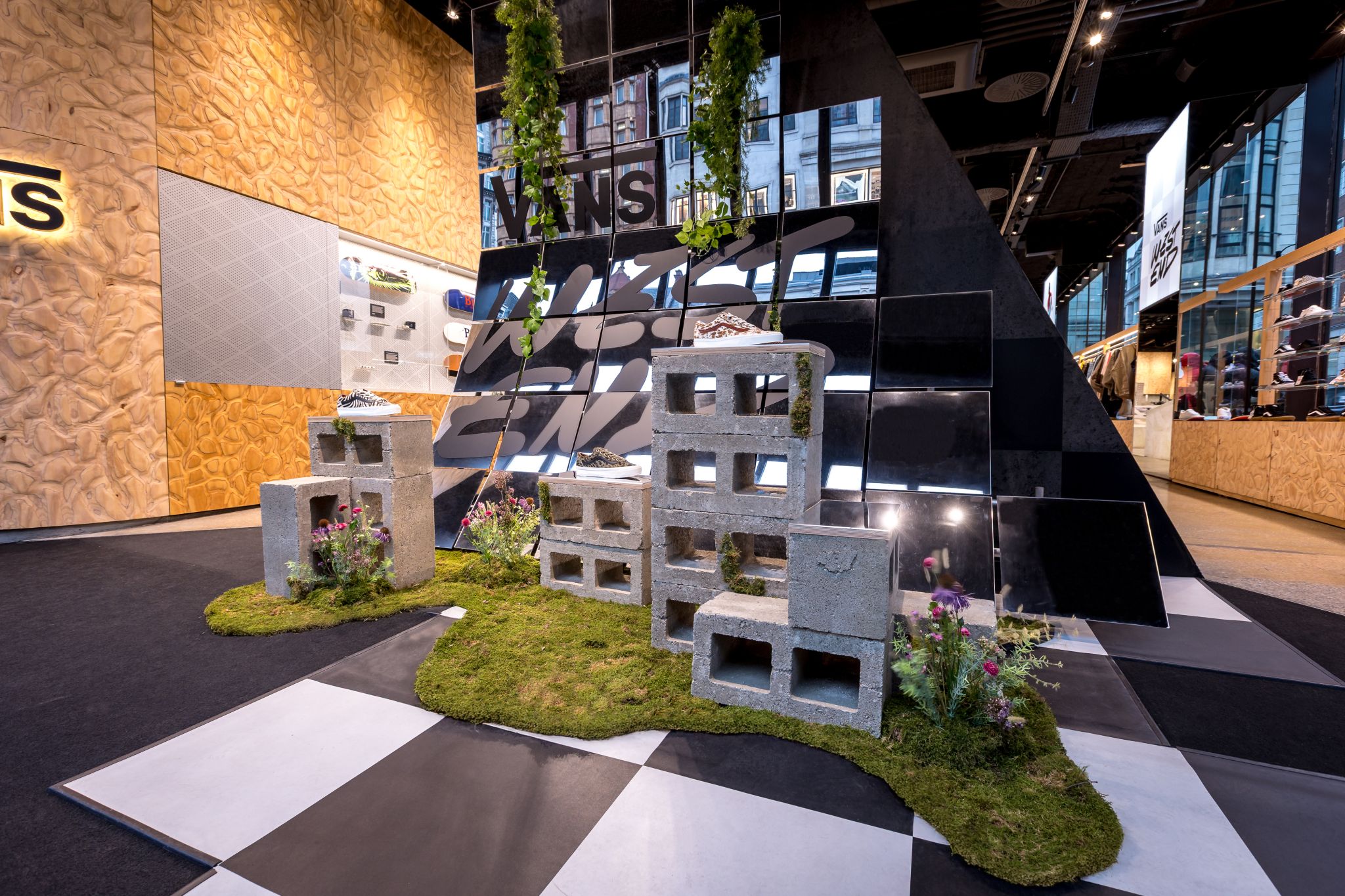
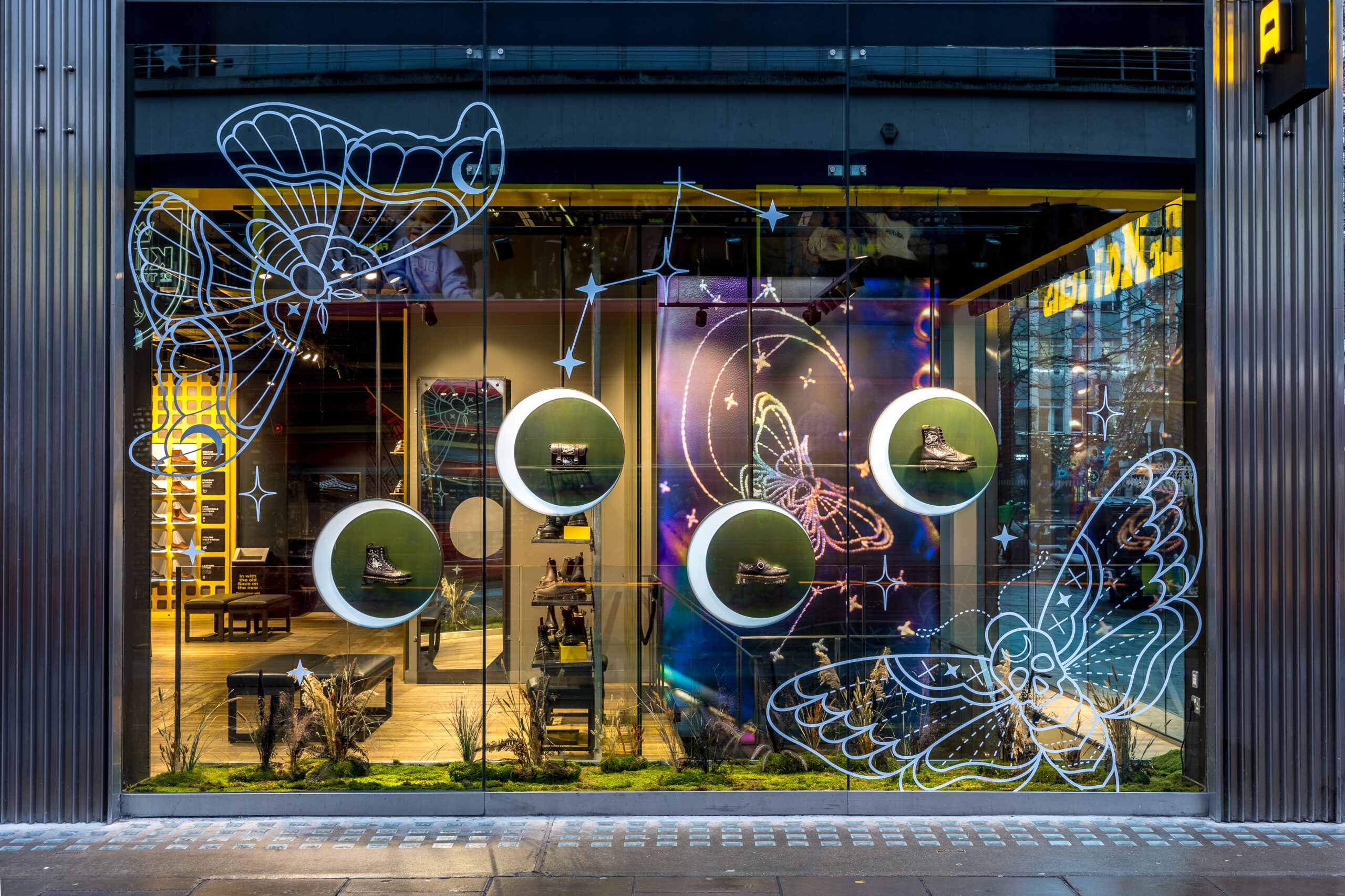
That doesn’t necessarily mean every location needs an identical setup. Imageco’s Dr Martens rollout combined five immersive concept stores with POS displays across a further 93 retail stores in Europe, showing how a campaign can adapt to different locations while maintaining a consistent brand experience.

Having a centralised production helps maintain those agreed specifications from one print run to the next. We combine in-house design, wide-format printing and finishing, with the capability to produce across rigid and roll materials. Its retail service covers everything from retail 3D POS displays to window and floor graphics, helping different campaign elements work together visually.
Getting the graphics printed is only half the job. A multi-store rollout needs a delivery plan that accounts for what each location actually needs, considering quantities, delivery windows and limited storage.
Coordinate deliveries around the retail installation schedule wherever possible, so materials arrive when they’re needed rather than sitting in the back of a store. At Imageco, our project management and logistics support helps coordinate nationwide rollouts, keeping production, delivery, and installation connected from start to finish to ensure every store gets the right POS, in the right quantity, at the right time.
Before anything arrives on site, establish what’s needed for a smooth installation. Where required, a site survey can assess measurements, surfaces, access, health and safety and the most suitable installation method. Delivery and installation should then be scheduled around store trading hours.
Our installation team supports multi-store retail rollouts across the UK and Europe, working around store schedules to minimise disruption.
A rollout doesn’t end when the doors open. Before production, consider how long the POS needs to last, whether displays can be reused or refreshed, and how they can be dismantled at the end of a campaign. Choosing the right materials and construction can support this too. We use materials like Xanita board, which is a sustainable fibreboard and can be engineered into reusable retail displays with future use in mind.
Planning a multi-store retail POS rollout? Speak to our team about taking your campaign from design and prototyping through to production and installation, all under one roof.